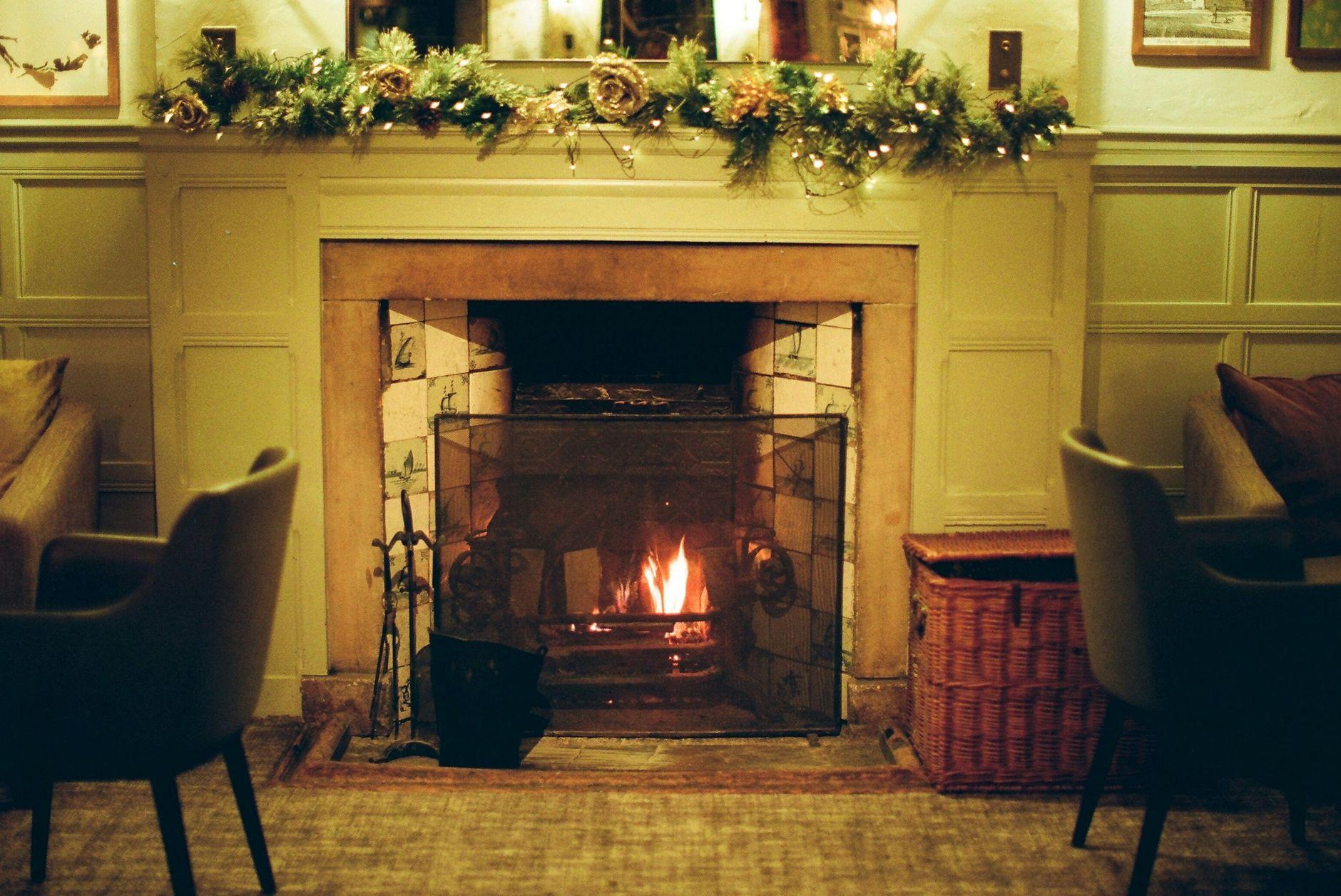
A wood fire is a small, live source of sparks sitting in the middle of your house. Most of the time that is fine. The screen catches what pops forward, the flue carries the rest upward, and the cap screen stops what is still glowing at the top. But every one of those defenses has to be in working order every time you light it, and in a dry, windy year in South El Monte the margin is thin. A sealed gas unit takes the sparks out of the picture. This post compares the two from that angle, with prices, so you can decide which to keep.
How each one behaves in fire season
An open wood fireplace pulls room air across the fire and sends smoke, heat and sparks up the flue. Burning wood spits, and a log that rolls can push embers past a loose screen. Above, the flue collects creosote, which is fuel, and the cap screen is the last barrier between a spark and the roof next door. When everything is maintained, the risk is managed. When the screen has rusted through or the flue has not been swept, it is not.
A gas insert is a sealed steel firebox with a glass front that slides into the opening you already have. It burns gas, not wood, so there is nothing to spit, no ash, and no creosote. Exhaust leaves through a new flexible vent run up inside the old flue, and outside air for the burner comes down beside it. Nothing from the room feeds the fire, and nothing glowing leaves the top.
Burn day rules
Wood fires in South El Monte answer to the South Coast air district, whose Rule 445 allows it to forbid them on smoggy days through the cold months. Those bans do not apply to gas. If you like a fire on a chilly evening, an insert means the evening is not decided by an air quality forecast.
Side by side
| Point | Open wood fireplace | Sealed gas insert |
|---|---|---|
| Sparks and embers | Yes, controlled by screen and cap | None |
| Creosote in the flue | Builds every season | None |
| Ash to haul out | Yes | None |
| Heat into the room | Low, much goes up the flue | High, a fan pushes it out |
| Winter burn bans | Applies | Does not apply |
| Yearly upkeep | Sweep from $435, cap and screen check | Gas service and vent check |
| Cost to convert | None | $2,900 to $5,850 installed |
What the conversion price covers, and what moves it
Turning your current firebox into a sealed gas insert runs $2,900 to $5,850 with us, fitted and tested. That range holds the insert, its vent run up the old flue, the connection to your gas supply, a trim panel to close the gap around the face, and the setup. Where your job falls depends on:
- The unit you pick. A plain model with a standing pilot sits low. A larger box with a remote, a thermostat and a quiet fan sits higher.
- The firebox. Older brick fireboxes often narrow toward the back. We measure carefully, because a unit that fits on paper may not slide in.
- Gas at the hearth. Many local houses already have a gas line to the firebox for a log lighter. If it is undersized, or there is none, a new run is added.
- Height of the flue. A taller chimney needs a longer vent run.
- An outlet for the fan. Units with a fan or electronic ignition need power close by.
Before a firm number, we look up the flue. If the chimney has a crumbling top, a damper frame in the way, or a cracked smoke chamber, those are listed as separate items so you can see each one. The fireplace inserts page has more about the units we fit. To get a price for your own fireplace, ask for an insert quote and tell us whether there is a gas key near the hearth and roughly how wide the opening is.
Reasons to keep the wood fire
Some owners love the sound and smell of real wood, and that is a fair reason to keep an open fireplace. If you do, keep it in fire season shape:
- A spark arrestor cap with whole mesh on top. Ours is fitted and quoted after we measure the flue.
- A sweep before the burning season, from $435.
- A glass door or tight mesh screen in front of the opening.
- A camera look at the flue if you have just bought the house or have not had one in years.
Our chimney cap cost post and sweep hiring post cover those two jobs.
Reasons to switch
- The house sits where wind carries embers, and you would rather not have an open flame in it at all.
- You actually want heat. An open fireplace can make the rest of the room colder by drawing warm air up the chimney.
- You are tired of ash, wood storage and sweeping.
- Someone in the house is sensitive to smoke.
Questions owners ask
Does the old chimney still need anything after an insert goes in? The vent run inside it does the work, but the top still needs a cap, and the masonry still needs to hold together. We look at both during the install.
Can I go back to wood later? Yes. The insert can come out, though the flue would need a fresh look before any wood fire.
Is a gas insert free of risk? No gas appliance is. It needs a yearly service and a working carbon monoxide alarm in the home, which state law expects anywhere a gas appliance burns.
To weigh the two for your own fireplace, start at our contact page with the city and the kind of fireplace you have now.
Get Your Own Chimney Looked At
A guide tells you what to look for; a visit tells you what your chimney actually has. Atherton works from South El Monteand covers El Monte, Norwalk and the nearby Los Angeles neighborhoods, checking caps, screens, crowns and flues and pricing each fix before any work.